Yazılar

Tesla Moves to Block Austin from Releasing Robotaxi Records

Tesla is attempting to stop the city of Austin, Texas, from disclosing public records to Reuters regarding its upcoming launch of self-driving robotaxis, expected to begin operating on Austin’s streets this month. The electric vehicle maker argues that releasing the documents would expose confidential business information and damage its competitive position.

Reuters submitted a public records request in February, seeking communications between Tesla and Austin officials over the prior two years. This request came after Tesla CEO Elon Musk’s January announcement that the company would soon introduce fare-collecting robotaxis in Austin.

In early April, Austin’s public-information officer Dan Davis informed Reuters that certain “third parties” had asked the city to withhold the requested records, citing privacy and proprietary concerns. The city then referred the matter to the Texas Attorney General’s office on April 7, as state law requires when disputes arise over the release of potentially confidential information.

On April 16, a Tesla attorney sent a letter to the Attorney General, objecting to the release of what it described as “confidential, proprietary, competitively sensitive commercial, and/or trade secret information.” Tesla argued that public disclosure of these communications would expose its deployment procedures, strategy, and operational status, potentially causing the company “irreparable harm.”

Tesla and the Texas Attorney General’s office have declined to comment further. Austin city officials emphasized that they take no stance on whether the materials qualify as proprietary, but are obligated by law to seek the Attorney General’s judgment when a third party claims confidentiality.

Musk has made self-driving technology central to Tesla’s future growth. While the company has repeatedly delayed full autonomy, the robotaxi launch in Austin is being closely monitored by investors and regulators as a potential breakthrough moment. Many analysts believe Tesla’s high market valuation depends largely on the commercial success of its robotaxis and humanoid robots.

Details of Tesla’s Austin robotaxi program remain limited. The company has only revealed plans to initially deploy between 10 and 20 autonomous vehicles in certain, undisclosed areas of Austin.

In response to Tesla’s objections, a Reuters attorney argued on April 23 that the public has a right to transparency, especially when Tesla plans to operate untested autonomous vehicles on public roads. “Tesla’s deployment of the unproven technology on Texas roadways makes its plans an issue of enormous importance to Texas and the public at large,” the attorney wrote.

The Texas Attorney General’s office is expected to issue a ruling within 45 business days, a deadline that arrives next week.

China’s BYD to Nearly Triple Dealership Network in South Africa by 2026

Chinese electric vehicle (EV) manufacturer BYD plans to significantly expand its presence in South Africa, aiming to nearly triple its dealership network by next year as it pushes to grow its market share in Africa’s largest automotive market. The company currently operates about 13 dealerships in the country.

Steve Chang, General Manager of BYD Auto South Africa, told Reuters that BYD expects to increase its dealerships to around 20 by the end of 2025 and further expand to between 30 and 35 locations by the end of 2026. This expansion supports BYD’s goal of becoming a well-known brand across South Africa amid a growing interest in new energy vehicles (NEVs).

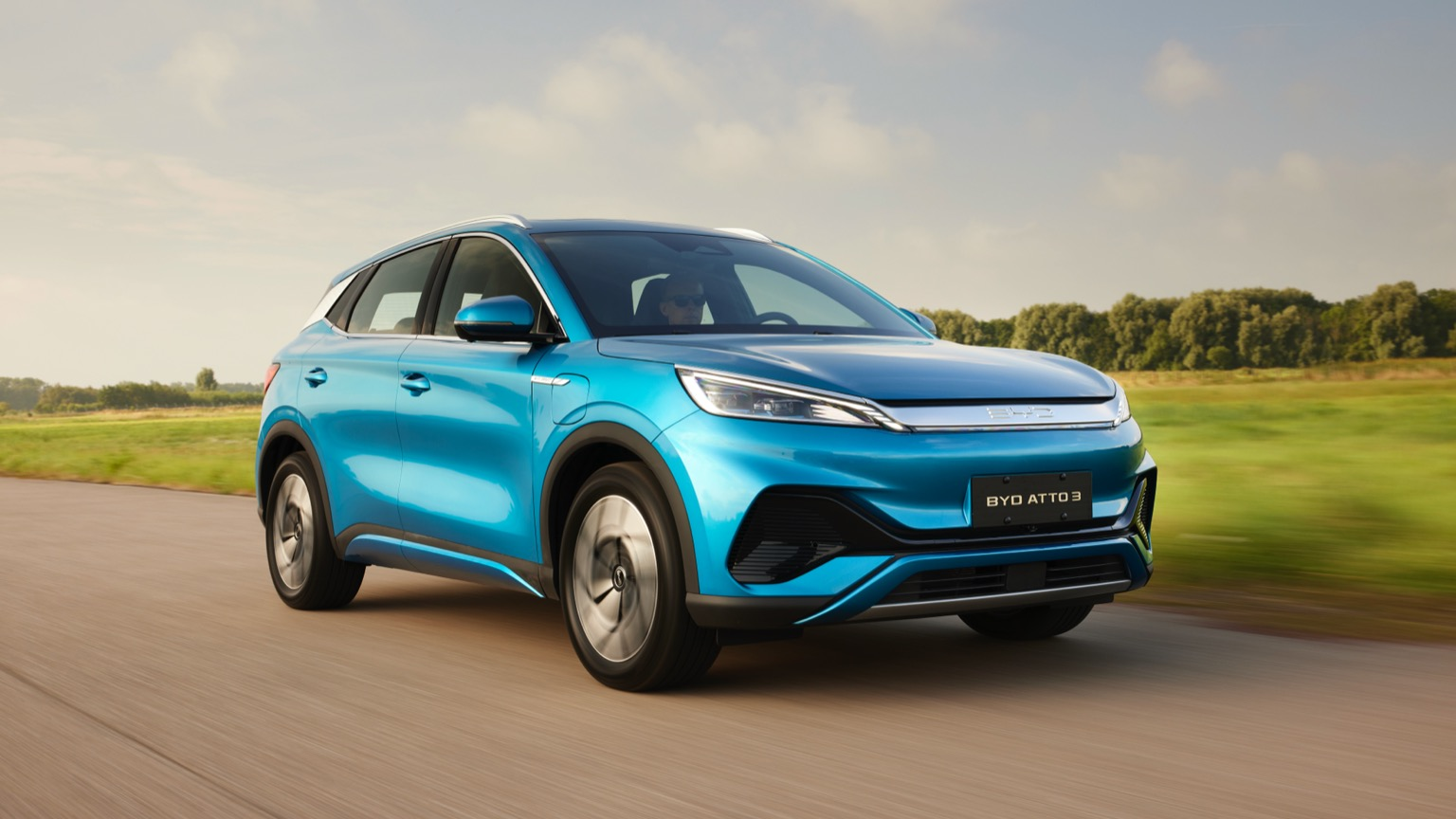
BYD launched in South Africa in 2023 with its all-electric ATTO 3 model. It now offers six models locally, including the plug-in hybrid Shark pickup, hybrid SEALION 6, and all-electric SEALION 7 SUVs introduced in April, reflecting its strategy to offer both hybrid and electric powertrains.

Sales of NEVs in South Africa nearly doubled in 2024, reaching 15,611 units compared to 7,782 units in 2023, according to the National Association of Automobile Manufacturers of South Africa (NAAMSA). Despite the low overall share of NEVs, BYD is focused on capturing early market share as the country gradually transitions toward electrified transportation.

Chang emphasized the importance of educating consumers about EVs to align South Africa with global trends. However, challenges remain, including limited charging infrastructure, unstable power supply, and relatively high import duties on EVs compared to conventional vehicles.

BYD views South Africa as a critical market in the southern hemisphere and the largest in Africa. The company’s planned expansion aims to tap into this potential and accelerate EV adoption on the continent.

Xiaomi to Launch YU7 Electric SUV in July, Aims to Challenge Tesla’s Model Y in China

Xiaomi, China’s tech giant and the world’s third-largest smartphone maker, announced Thursday that it will begin sales of its second electric vehicle — the YU7 SUV — in July, positioning it as a direct challenger to Tesla’s Model Y, the best-selling EV SUV in China.

The YU7 boasts a driving range of up to 835 kilometers (519 miles) per charge, surpassing Tesla’s redesigned Model Y, which has a maximum range of 719 kilometers (447 miles). Xiaomi did not disclose pricing or begin pre-orders but hinted that, based on configuration, the YU7 could be priced 60,000–70,000 yuan ($8,300–$9,700) higher than the Model Y’s base price of 263,500 yuan ($36,574).

“But we’ll talk about the price in July,” said Xiaomi founder and CEO Lei Jun during the product launch event.

Competitive Edge and Market Context

  • The YU7 is Xiaomi’s second EV following the SU7, a sporty electric sedan that launched last year with design cues from Porsche and competitive pricing under Tesla’s Model 3.

  • Since December, the SU7 has consistently outsold Tesla’s Model 3 in China.

  • Xiaomi has delivered over 258,000 SU7 units since launch, according to Lei.

Headwinds and Safety Concerns

Xiaomi’s growing EV business faces scrutiny after a fatal highway crash in March involving an SU7 in driving-assistance mode. The company has also apologized for unclear marketing practices that led to allegations of false advertising.

“We apologize for marketing that was not clear enough,” Lei acknowledged, amid efforts to restore consumer trust.

Beyond EVs: Xiaomi Chips Up Its Game

Alongside the YU7 announcement, Xiaomi unveiled its second self-developed chip, the Xring T1, following the earlier launch of its Xring O1. Lei claimed the Xring O1 rivals Apple’s A18 chip in performance — signaling Xiaomi’s deeper push into semiconductor self-sufficiency and hardware-software integration.

The simultaneous launch of smartphones, tablets, and EV innovations reflects Xiaomi’s ambition to become a vertically integrated tech powerhouse, blending consumer electronics, mobility, and AI-powered smart hardware into a unified ecosystem.