Yazılar

Bioinspired Robot Mimics Birds with Self-Launching Wings and Precise Flight Control

Chinese engineers have introduced RoboFalcon 2.0, a cutting-edge flapping-wing robot capable of self-takeoff and controlled low-speed flight. The new model addresses two major limitations of its predecessor: the original RoboFalcon could not sustain slow flight and required external assistance to lift off. Weighing 800 grams, RoboFalcon 2.0’s reconfigurable wings combine flapping, sweeping, and folding in a single motion, closely imitating bird-like wing mechanics. This design allows for smoother takeoffs and enhanced pitch and roll control in midair, offering a significant step forward in avian-inspired robotics.

Unlike many previous bio-inspired flying machines that relied on simplified, one-dimensional wing movements typical of insects or hummingbirds, RoboFalcon 2.0 incorporates three-dimensional kinematics similar to those observed in birds and bats. This advancement allows the wings to generate lift and maneuverability more naturally, resulting in more efficient flight. According to experiments detailed in Science Advances, wind tunnel testing and simulations confirmed that the sweeping motion of the wings significantly improves lift and pitching stability, enabling precise control during low-speed flights.

A key innovation lies in the robot’s ability to achieve assisted-free takeoffs. By using flexible wing mechanics and coordinated ventral downstrokes paired with tucked upstrokes, RoboFalcon 2.0 produces enough thrust to launch itself independently. This system replicates natural bird flight patterns while keeping the flight control mechanisms less complex, a crucial factor for scalable robotic applications. The underactuated design ensures that the wings do the heavy lifting without overwhelming the control system.

In real-world demonstrations, RoboFalcon 2.0 successfully performed stable low-speed maneuvers and smooth takeoffs, marking a notable milestone for bio-inspired aerial robotics. Researchers believe that the integration of bird-like wing dynamics and self-launch capabilities could pave the way for next-generation flying robots in surveillance, environmental monitoring, and even rescue missions. By bridging the gap between natural avian flight and mechanical design, RoboFalcon 2.0 showcases how robotics can closely mimic the efficiency and adaptability of nature.

Nvidia and Abu Dhabi’s TII launch first AI & robotics research hub in Middle East

Nvidia and Abu Dhabi’s Technology Innovation Institute (TII) have unveiled a joint artificial intelligence and robotics laboratory in the United Arab Emirates, the first Nvidia AI Technology Center in the Middle East. The hub will combine Nvidia’s cutting-edge computing power with TII’s applied research to accelerate work on advanced AI models and robotics platforms.

Najwa Aaraj, CEO of TII, said the lab will leverage Nvidia’s new Thor chip, designed for next-generation robotic systems. The collaboration will support TII’s work on humanoids, quadruped robots, and robotic arms, with both existing staff and new hires contributing to the effort.

TII is the applied research arm of Abu Dhabi’s Advanced Technology Research Council, which drives the UAE’s long-term strategy to become a global AI leader. The Gulf nation has poured billions into AI initiatives, including plans for one of the world’s largest data center hubs in Abu Dhabi, built with U.S. technology and Nvidia’s most advanced chips. That project, announced during President Donald Trump’s May visit, remains pending amid U.S. security concerns over the UAE’s ties with China.

Aaraj noted that TII has been using Nvidia’s GPUs to train large-scale language models for some time, with discussions on the joint lab beginning about a year ago. The new hub will host researchers from both organizations and expand staff as projects scale.

The initiative underscores both Nvidia’s push into global AI partnerships and the UAE’s ambition to position itself at the forefront of artificial intelligence and robotics innovation.

AI-Guided Cameras Enable Solo Surgery in Breakthrough for Surgical Automation

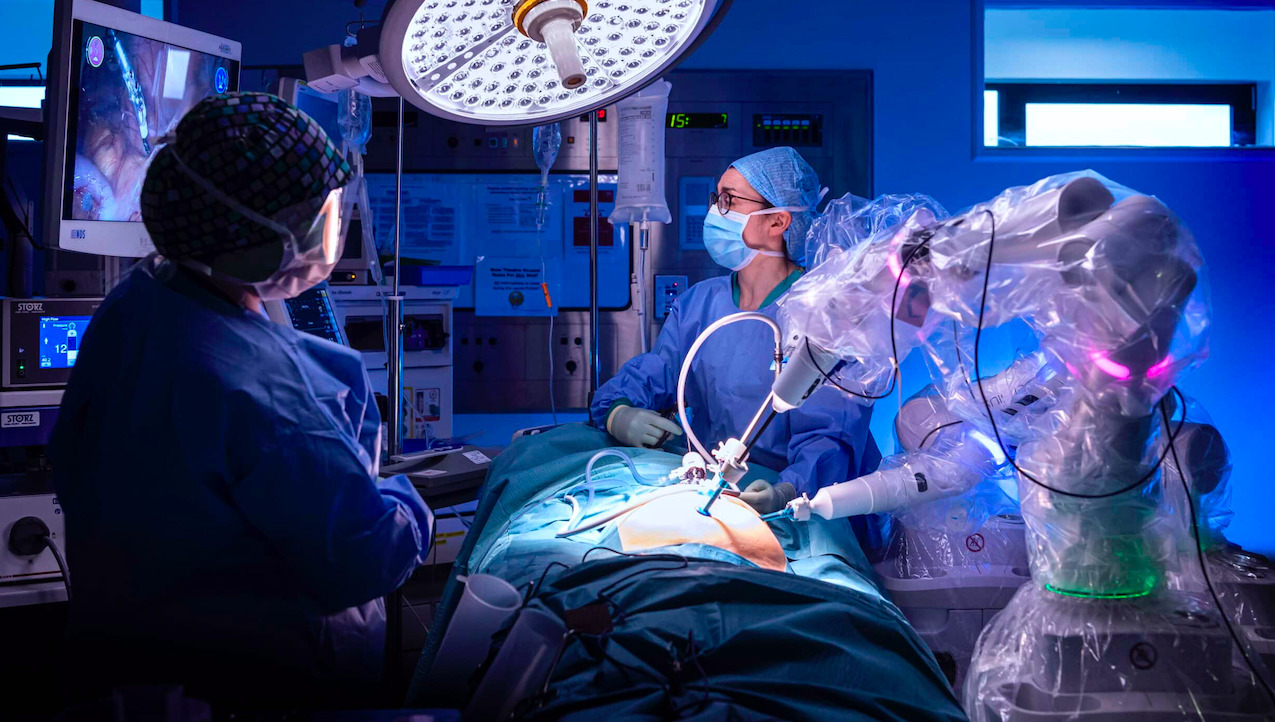
For the first time in Chile, a surgeon successfully performed laparoscopic gallbladder removal solo using an AI-guided autonomous camera, marking a milestone in the march toward surgical automation.

Key Event

  • Dr. Ricardo Funke, chief of surgery at Clinica Las Condes in Santiago, carried out the operation without a human assistant.

  • The AI-powered camera tracked his instruments in real time, automatically adjusting angles to provide optimal visualization.

  • The procedure also used magnetic surgical instruments, further enhancing precision.

Why It Matters

  • Traditionally, laparoscopic surgeries require a camera operator.

  • With AI, one surgeon can handle the entire operation, boosting efficiency and reducing reliance on additional staff.

  • This advancement represents a practical step toward fully automated surgeries.

Wider Context

  • The global surgical robotics market is forecast to expand from $15.6 billion in 2024 to $64.4 billion by 2034 (Precedence Research).

  • In July, Johns Hopkins University demonstrated an AI-guided robot performing complex procedures on pig organs, highlighting global momentum in the field.

  • The technology in Santiago was developed by Levita Magnetics, whose CEO Alberto Rodriguez said the procedure is “the first step in surgical automation with a real patient.”

Outlook

  • AI-guided tools may soon play a central role in improving surgical precision, reducing risks, and enabling wider access to care.

  • While full autonomy remains a future goal, hybrid approaches—where AI assists human surgeons—are rapidly moving from research labs to real operating rooms.