Yazılar

Tesla’s $1 Trillion Musk Pay Package Faces Criticism but Likely to Win Shareholder Backing

Tesla’s board has approved a record-breaking $1 trillion compensation plan for CEO Elon Musk, designed to lock him into the company for the next decade as it pivots toward AI and robotics. Despite the staggering figure, analysts and pay experts say the plan will likely secure shareholder approval at November’s annual meeting, given Musk’s track record and Tesla’s reliance on him.

The package grants Musk 96 million restricted shares worth $31 billion upfront, vesting over two years, plus 12 additional tranches tied to ambitious earnings and market-cap milestones. If all targets are met, Musk’s stake could rise from 13% to 25%, positioning Tesla for a potential $8.5 trillion valuation—larger than Microsoft, Alphabet, and Meta combined today.

Tesla’s board defended the deal, saying Musk is “the only person on the planet” capable of unlocking the company’s potential. Negotiations reportedly involved 37 meetings with lawyers and 10 with Musk, during which Musk insisted on significant control, partial repayment for his voided $56 billion 2018 package, and assurances he wouldn’t be sidelined.

Supporters argue the plan gives Musk incentive to stay and aligns payouts with extraordinary growth. Critics call it excessive corporate governance failure, with unions and pension funds urging rejection. “This is investor money that could go into R&D or acquisitions,” said Kristin Hull of Nia Impact Capital, who signaled a possible shareholder challenge.

Large funds—Vanguard, BlackRock, and State Street—have yet to reveal their votes, though history suggests at least two may back Musk. Meanwhile, Tesla’s stock closed 3.6% higher at $350.84 Friday but remains down 13% in 2025, reflecting weak EV demand and rising competition.

The deal’s sheer scale, combining AI ambition, governance controversy, and Musk’s polarizing persona, ensures it will dominate investor debates well beyond November’s vote.
Could Robotics and Timber Solve Britain’s Housing Shortage?

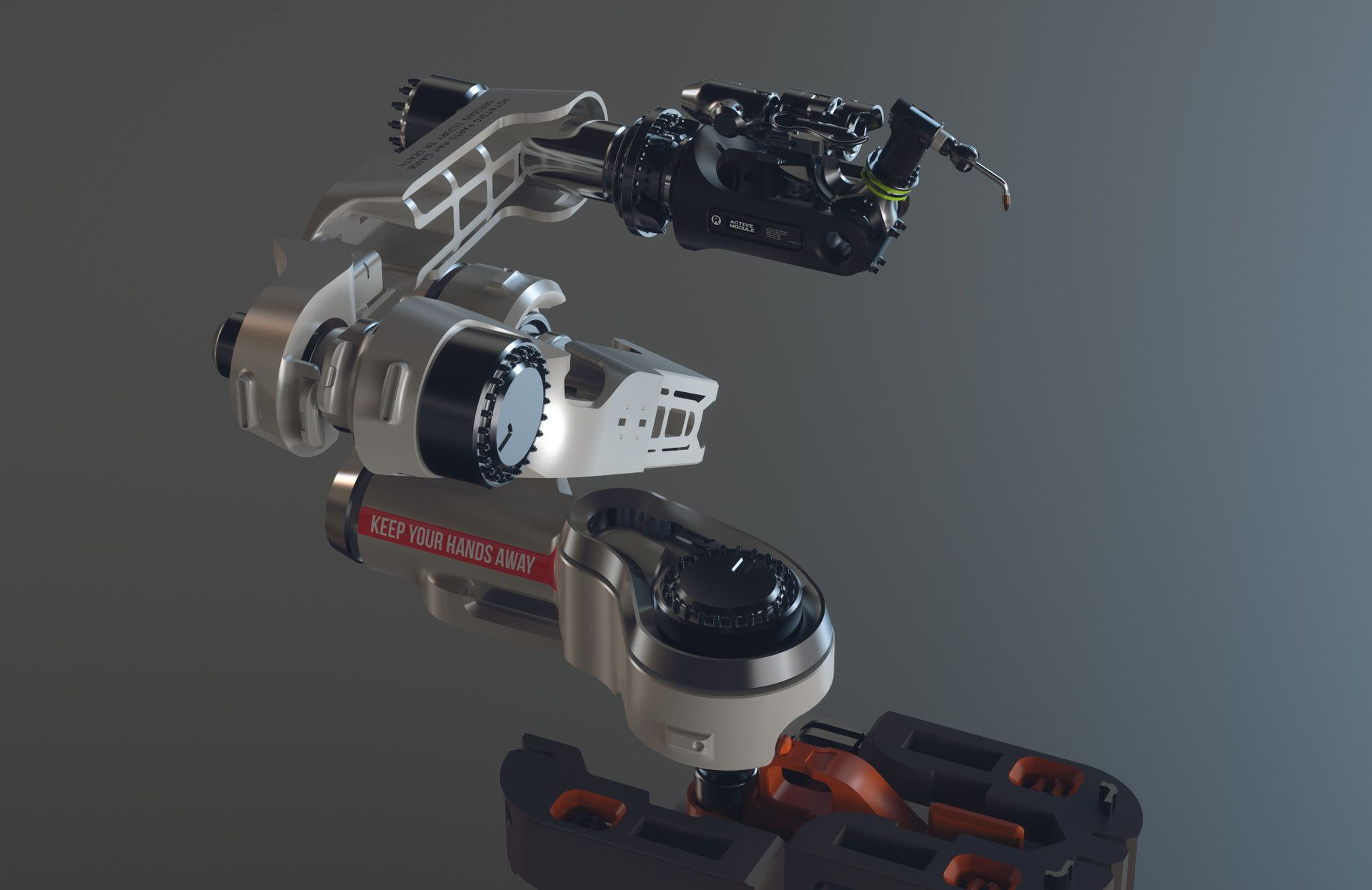
Gigantic robot arms guided by artificial intelligence are producing timber building frames at a factory in Oxfordshire, England, offering a potential solution to the UK’s housing challenges. With the government targeting 300,000 new homes per year, some housebuilders say combining technology with sustainable materials could address both skills shortages and environmental goals.

England remains behind many similar economies in the share of timber-framed homes, and Britain as a whole is one of the slowest adopters of construction robotics, according to Heriot-Watt University’s National Robotarium.

“We’re seeing more major and smaller housebuilders embracing timber to overcome skills and carbon challenges,” said Alex Goodfellow, CEO of Donaldson Timber Systems (DTS). The company produces timber-frame walls, floors, and roofs for homes and commercial buildings, delivering pre-assembled sections for rapid onsite assembly. Its automated production reduces labour needs, costs, and construction time by roughly 10 weeks compared with masonry, while a study by Rider Levett Bucknall found timber to be 2.8% cheaper than traditional materials.

DTS’s Witney factory uses AI to digitize designs, minimizing paper drawings, while robotics and laser technology streamline production for roughly 100 homes per week.

Barriers remain. Timber historically faced resistance in England due to concerns about durability, rot, and fire. Amit Patel of the Royal Institution of Chartered Surveyors noted difficulties in securing warranties for timber homes, while past efforts by Barratt Homes in the 1980s faltered over similar issues. Current building regulations and fire safety guidelines, however, have mitigated many of these concerns, according to Andrew Orriss of the Structural Timber Association (STA).

The STA estimates that off-site timber construction could deliver around a third of the government’s annual housing target. In 2023/24, England built nearly 200,000 new homes, with approximately 40,500 of those using timber frames. Builders including Vistry and Taylor Wimpey have opened or plan to open timber-frame factories, and Bellway intends to use timber for a third of its projects by 2030.

Timber’s environmental benefits are also highlighted. Simon Park, head of sustainability at Bellway, said timber stores more carbon than it emits, whereas concrete blocks are among the largest carbon contributors. Yet, around 80% of timber used in the UK is imported, primarily from Europe, compared with 20% of bricks. Mortgage availability for timber homes remains a concern but could improve with stronger government support, according to mortgage broker Riz Malik.

An ageing construction workforce underscores the need for robotics. About 20% of UK construction workers are over 50, with a quarter expected to retire in the next decade. Robotics adoption hubs, supported by £40 million ($54 million) from the government, aim to modernize the sector, though the UK lags Europe and the U.S. in construction robot density. In 2023, there were 0.5 robots per 10,000 UK construction workers, compared with 1.5 in Europe.

Frank O’Reilly, DTS manufacturing director, said robotics not only addresses labour shortages but also attracts younger, tech-savvy talent into the industry. “It encourages young people to consider this as a career,” he added.

Tesla Refocuses AI Chip Development, Elon Musk Confirms Shift Away from Dojo Supercomputer Team

Tesla CEO Elon Musk announced that the company will streamline its AI chip research to concentrate primarily on developing inference chips designed to run AI models and enable real-time decision-making. This follows reports that Musk ordered the disbandment of the in-house Dojo supercomputer team, with its leader, Peter Bannon, leaving the company.

The Dojo supercomputer, built around custom training chips, was originally created to process vast data from Tesla electric vehicles to train its autonomous driving software. Musk stated on X that it no longer makes sense for Tesla to split resources between two distinct AI chip designs. Instead, all efforts will now focus on Tesla’s AI5, AI6, and subsequent chips, which are optimized for inference tasks and still capable of training AI models effectively.

Analysts, including Morgan Stanley’s Adam Jonas, had previously valued the Dojo supercomputer at $500 billion in 2023, viewing it as a key growth driver for Tesla beyond vehicle sales, comparable to Amazon’s cloud business. It remains unclear how this restructuring will impact Tesla’s valuation.

Industry-wide, tech companies are consolidating custom chip development to reduce latency, power consumption, and costs while focusing on fewer architectures. Tesla’s recent restructuring includes executive departures, job cuts, and a strategic pivot toward AI-driven self-driving technology and robotics, with Musk aiming for synergy across his technology ventures.

Musk has announced plans for next-generation AI5 chips targeted for production by the end of 2026 and revealed a $16.5 billion contract with Samsung Electronics to supply AI6 chips. These chips are expected to power Tesla’s autonomous vehicles and Optimus humanoid robots, with potential for broader AI applications due to their substantial compute capabilities.

According to Bloomberg, around 20 Dojo team members have already left to join the startup DensityAI, while remaining staff are being reassigned within Tesla to other compute and data center projects.