Yazılar

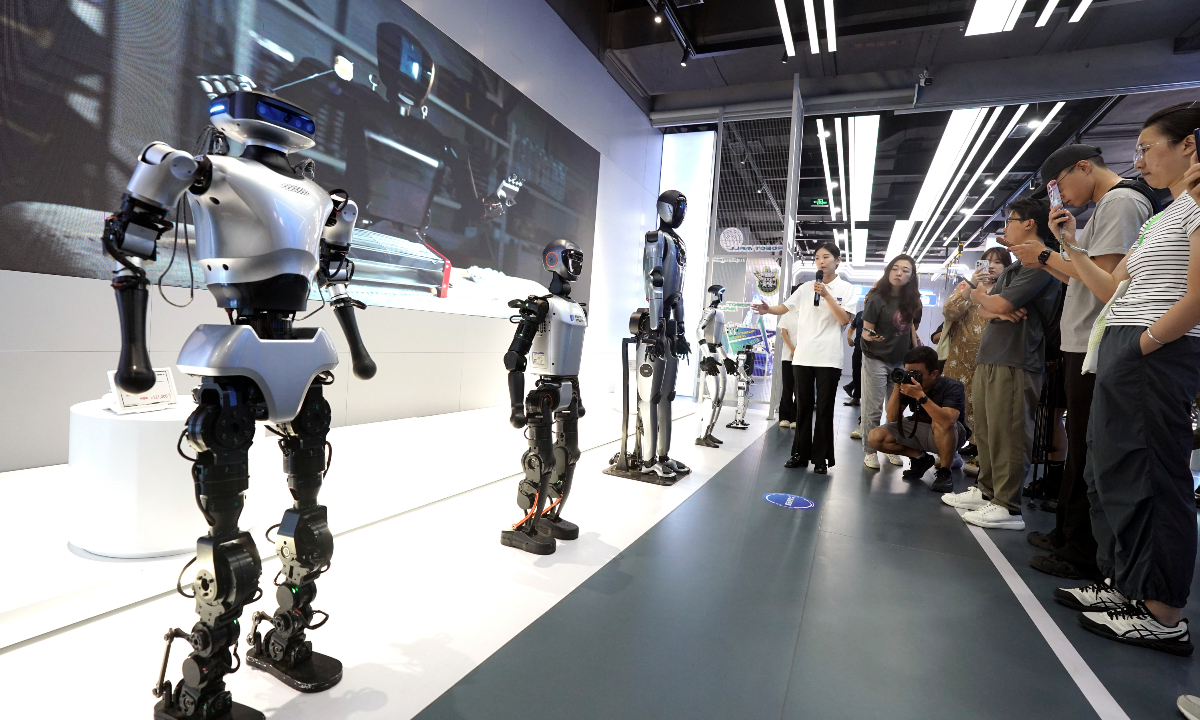
Beijing Robot Store Stocks Einstein Replicas, Chess Partners in AI Leadership Push

A new store opening in Beijing this Friday will showcase over 100 humanoid and consumer-oriented robots from more than 40 Chinese brands, including Ubtech Robotics and Unitree Robotics. Among the offerings are life-sized replicas of Albert Einstein designed to teach physics, robotic chess partners, and pet robots, highlighting China’s ambition to lead in artificial intelligence and robotics.

The store adopts a “4S” dealership model—providing sales, spare parts, maintenance, and survey services—catering to a growing consumer market with robot prices ranging from around 2,000 yuan ($278) to several million yuan. Wang Yifan, the store director, noted the importance of customized consumer solutions, stating that mass adoption of robots requires more than just manufacturers’ efforts.

China’s aggressive push into robotics aims to mitigate economic challenges such as its ageing population and slowing growth. The sector benefits from government support with subsidies exceeding $20 billion over the past year, alongside a planned one trillion yuan ($137 billion) fund to back AI and robotics startups.
RealSense Spins Out of Intel, Raises $50 Million to Boost AI Vision in Robotics

RealSense, a computer vision technology company, announced on Friday its official spinout from Intel Corp and the successful raising of $50 million in early-stage funding. This capital injection aims to accelerate RealSense’s growth in the fast-expanding robotics market. The firm specializes in developing 3D cameras that allow machines to perceive depth, interpret surroundings, and interact intelligently with their environment.

Backed by Intel Capital, the MediaTek Innovation Fund, and other strategic investors, RealSense plans to use the funds to increase manufacturing capacity and expand its global sales and marketing efforts. CEO Nadav Orbach highlighted that a portion of the funding will also support R&D for AI software and the next generation of depth cameras, though the company did not disclose the valuation of the funding round.

Orbach noted that while some of RealSense’s customers are vertically integrated companies, the firm currently serves over 3,000 active customers worldwide, reflecting strong ecosystem growth. Their latest product, the D555 camera, supports data and power transmission through a single cable and includes embedded AI features that enhance real-time environmental awareness for robots and security systems.

RealSense’s depth cameras are integrated into 60% of the world’s autonomous mobile robots and humanoids, counting clients like China’s Unitree Robotics and Switzerland’s ANYbotics. Beyond robotics, the company is expanding into security systems utilizing facial recognition technologies supported by its proprietary software for environment mapping and identification.

While manufacturing primarily occurs in Thailand and other parts of Asia, RealSense maintains its headquarters and business operations in the United States. Orbach mentioned that while IPO or acquisition possibilities remain open, the company’s current focus is on sustained, long-term growth.

ABB Launches New Robot Families for China’s Mid-Sized Market to Boost Automation

Swiss engineering giant ABB (ABBN.S) announced on Wednesday the launch of three new families of factory robots specifically designed for the Chinese market, aiming to capitalize on growing automation demand among mid-sized companies. These new robots will serve sectors such as electronics, food and beverage, and metals, performing tasks like polishing and product placement on production lines.

ABB highlighted that China’s mid-market segment, where robots handle simpler tasks like pick-and-place operations, packaging, and basic inspections, is expected to grow by 8% annually in value over the next three years—significantly faster than the global robotics industry in recent years. This surge is driven by labor shortages and the increasing ease of operating robotics technology, aided by advances in artificial intelligence.

The new ABB robot families—Lite+, PoWa, and IRB1200—offer different arm load capacities and speeds tailored to customer needs. One model can be set up and operational within 60 minutes of unpacking and can be programmed using voice commands or by demonstration. Pricing for these robots, along with controllers and equipment, ranges from approximately $20,000 to over $100,000.

China remains the largest robotics market globally, accounting for 51% of new robot installations worldwide in 2023, according to the International Federation of Robotics. It is also ABB’s biggest market for robotics, making up about 30% of the company’s robotics business.

Sami Atiya, president of ABB’s robotics and discrete automation division, downplayed concerns about potential impacts from U.S. tariffs on China, citing the strong domestic market and persistent labor shortages as key demand drivers. The robots will be manufactured at ABB’s new Shanghai factory.

Earlier this year, ABB announced plans to spin off its robotics division, which competes with Japan’s FANUC, Yaskawa, and Germany’s Kuka. Atiya said the spin-off remains on track for completion by Q2 2026 but did not disclose potential valuations or buyer interest, noting that while ABB is open to discussions, their primary goal is to proceed with the spin-off.