Yazılar

Northvolt Faces Production Challenges Amid Struggles to Meet EV Battery Targets

Challenges in Scaling Up Production

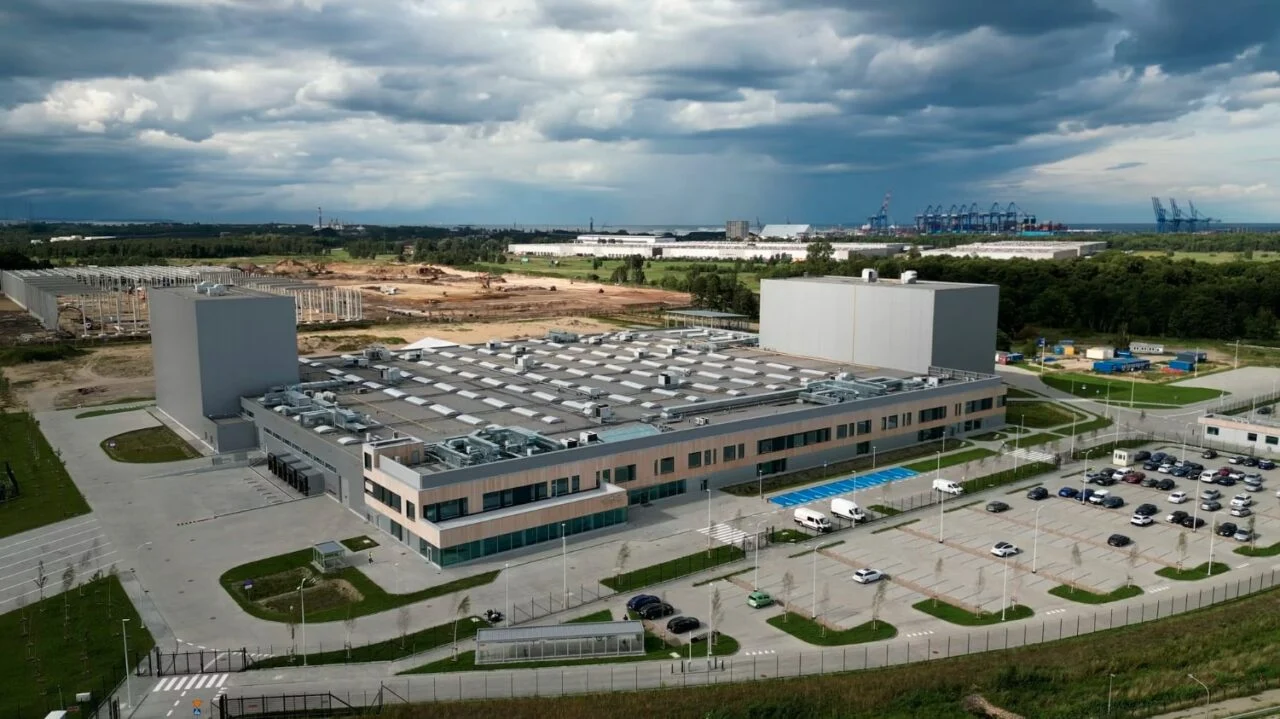
Northvolt, Europe’s flagship electric vehicle (EV) battery maker, is grappling with significant production setbacks at its Skellefteå plant in Sweden. Internal documents and company sources reveal persistent difficulties in meeting production goals for deliverable battery cells, raising concerns about its ability to fulfill ambitious targets.

The company’s “Path to 100k” roadmap, unveiled earlier this year, aimed to produce 100,000 shippable cells per week by the end of 2023. However, by November 10, Northvolt had only achieved around 26,000 cells that week, falling short of its internal targets.


Adjusting Operations and Redefining Goals

In response to these challenges, Northvolt has reduced its production schedule to weekdays only and suspended operations in one of its two manufacturing buildings. The company says these measures aim to enhance quality control and optimize performance.

“Running fewer production lines allows us to focus on contracted customer volumes,” Northvolt stated.

Despite initial setbacks, the company claims to have tripled its cell manufacturing levels since January. However, its initial targets from September are now deemed “long out of date,” according to the company.


Key Issues Behind Production Delays

Company insiders attribute Northvolt’s struggles to:

  • Machine faults requiring fine-tuning and calibration.
  • Inexperienced staff, with production relying heavily on relatively new hires.
  • Unrealistic production ambitions, set against a backdrop of a challenging global industry.

Northvolt disagrees with this characterization, asserting that its team is among the most experienced in Europe’s nascent battery industry.


Strategic Review and Customer Adjustments

Amid its struggles, Northvolt undertook a strategic review in July, which has influenced operations, customer orders, and production goals. Following a €2 billion ($2.1 billion) order cancellation from BMW in June, Northvolt has focused on delivering cells primarily to Volkswagen-owned Audi, Porsche, and truckmaker Scania.

Scania, once impacted by Northvolt’s delays, has since renegotiated delivery plans. CEO Christian Levin noted improved performance:
“We had to adjust to a more realistic ramp-up pace, but deliveries are now on track.”


The Road Ahead

Despite its challenges, industry experts acknowledge that Northvolt remains ahead of other European competitors in the EV battery sector. Slowing production, according to Hans Eric Melin of Circular Energy Storage, can improve long-term outcomes by allowing for better machine maintenance and quality control.

Northvolt’s struggles highlight the broader difficulties faced by Europe in reducing reliance on Chinese battery manufacturers. While the company

CATL Considers U.S. Plant if Trade Policy Shifts Under Trump Administration

China’s CATL, the world’s leading electric vehicle battery manufacturer, has expressed interest in establishing a plant in the United States if the upcoming Trump administration eases restrictions on Chinese investments in the EV sector. Robin Zeng, CATL’s founder and chairman, disclosed that although CATL had previously explored U.S. investments, it was blocked by trade barriers and national security concerns under former trade policies, including tariffs that made Chinese EV and battery products prohibitively expensive in the American market.

These restrictions have targeted Chinese technology, with both the Trump and Biden administrations enforcing protective trade measures. Chinese battery technology, for instance, does not qualify for the consumer EV subsidies introduced under the Biden administration, and Chinese-made electric vehicles face a 100% tariff, effectively barring them from U.S. entry. Recently, a Republican-backed bill also proposed limiting EV incentives for vehicles containing Chinese-made batteries, a measure opposed by the current White House.

Despite these barriers, Trump has suggested openness to foreign automakers setting up production in the U.S. on the condition that they manufacture locally and employ American workers. This conditional openness has kept Zeng interested in revisiting U.S. opportunities, especially as CATL continues to license its technology to American automakers such as Ford and Tesla. Ford plans to open a Michigan facility utilizing CATL’s lithium-phosphate battery technology, while Tesla has a similar licensing agreement for battery production expected to launch in Nevada in 2025.

Zeng, who frequently discusses industry trends with Tesla’s Elon Musk, praised Musk’s vision for AI-driven autonomous vehicles. However, he voiced skepticism about Musk’s preference for cylindrical battery cells, specifically Tesla’s 4680 model, cautioning Musk that it would face significant technical challenges. Zeng also critiqued Musk’s tendency to set ambitious timelines, arguing that such accelerated deadlines may set unrealistic expectations among stakeholders. Musk, who has consistently aimed to push Tesla’s production limits, recently announced plans for fully autonomous Tesla models by 2024 and a “Cybercab” robotaxi by 2026, though these projections were met with investor skepticism.

While Zeng acknowledged Musk’s ambitious vision and alignment in pushing the EV industry’s boundaries, he cautioned that overly optimistic timelines could undermine progress. Nevertheless, Zeng emphasized that CATL is committed to expansion and innovation, awaiting a more favorable regulatory environment in the U.S. to potentially broaden its presence beyond licensing partnerships.


China-EU Tariff Dispute Unlikely to Escalate Further, Analysts Say

As China seeks resolution to its tariff dispute with the European Union (EU) regarding electric vehicles (EVs), analysts predict that Beijing will approach the situation with caution. Following China’s recent appeal to the World Trade Organization (WTO) to address the EU’s tariffs on its EVs, industry experts believe that both parties will avoid escalating the conflict significantly.

On Monday, China’s commerce ministry announced it had filed another complaint with the WTO, emphasizing that bilateral talks have not yielded satisfactory results. According to Shaun Rein, managing director of China Market Research, this latest action serves as a “warning shot” to Europe, indicating China’s strength while signaling a desire for cooperation. He anticipates a “measured” response from China as it navigates its economic relationship with Europe, particularly amid rising tensions with the U.S.

Since the implementation of the EU’s tariffs last Wednesday, discussions have surfaced regarding establishing minimum price commitments from Chinese car manufacturers as an alternative to the tariffs. The EU accounted for over 40% of China’s EV exports in 2023, making the economic stakes significant for both parties.

Sam Radwan, CEO of Enhance International, stated that the likelihood of the China-EU dispute escalating to the level of the U.S.-China trade tensions is low, primarily due to the EU’s dependence on China in its EV supply chain. The EU has increased tariffs on Chinese EVs to as high as 45.3% following a year-long investigation, prompting China to respond by targeting European exports like pork, dairy, and brandy.

European trade officials continue to engage in talks with their Chinese counterparts. Maros Sefcovic, the European Commission’s vice president, referred to China as the EU’s “most challenging trading partner” and expressed the bloc’s intent to be more assertive in addressing what it perceives as structural imbalances and unfair trade practices. Sefcovic emphasized that the EU does not seek trade wars but aims to rebalance its trade relationship with China.

Eugene Hsiao, head of China Autos at Macquarie Capital, noted that China will explore various avenues to pressure the EU into lowering tariffs. He suggested that a successful negotiation for lower tariffs could influence the level of investment Chinese EV manufacturers might consider for local production within the EU.

Reports indicate that China has advised its automakers to pause significant investment plans in European nations that support the tariffs, urging them instead to focus on countries that opposed the tariff measures. Notably, while countries like France, Poland, and Italy supported the tariffs in a recent vote, Germany, the EU’s largest economy and a significant car producer, opposed them.

In a meeting on Sunday, Chinese Commerce Minister Wang Wentao encouraged France to play a proactive role in fostering a solution that would benefit both the European and Chinese electric vehicle sectors. French junior trade minister Sophie Primas reaffirmed that while the EU aims to maintain trade relations with China, it would not compromise on critical issues.