Yazılar

China-Europe Rivalry Heats Up at Paris Car Show as EV Tariffs Loom

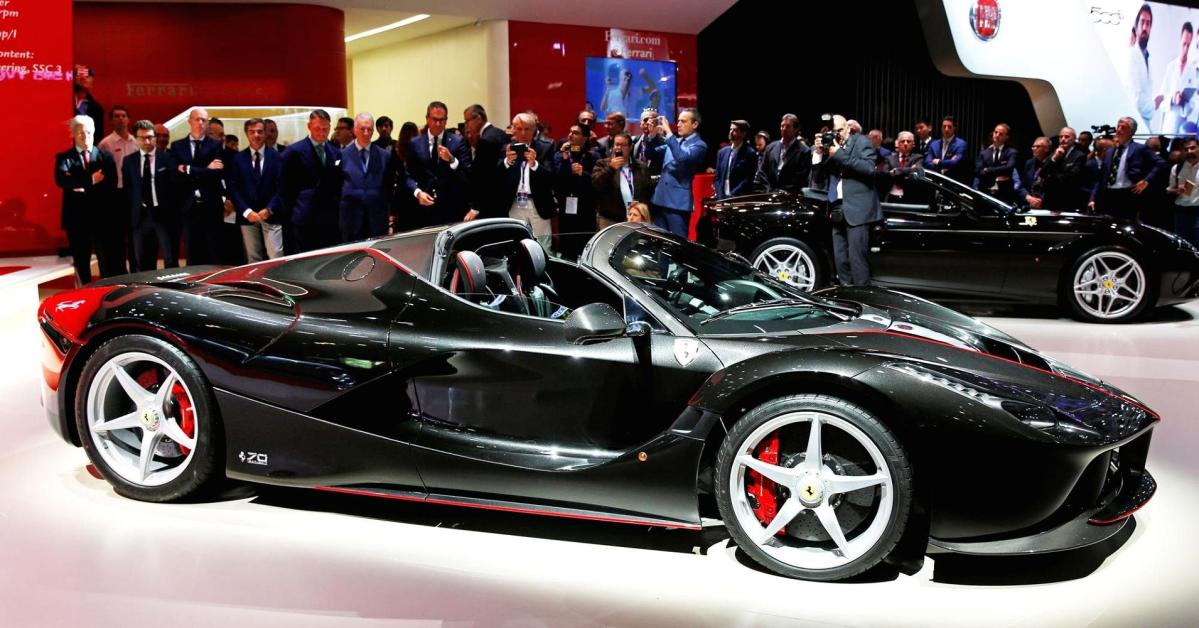
The Paris car show, one of Europe’s largest automotive events, has become a battleground for Chinese and European automakers. Tensions are rising as the European Union prepares to impose significant tariffs on Chinese-made electric vehicles (EVs), a move that could reshape the future of the industry amid already weak demand.

Chinese automotive giant BYD voiced concerns over the planned tariffs, which could reach 45%, warning that these levies would push up prices and deter consumers. Stella Li, executive vice president of BYD, highlighted that the higher costs would disproportionately affect lower-income buyers. “It will stop poorer people from buying,” she said, underlining the impact on affordability and consumer access.

This year’s Paris show, while showcasing major players from both sides, reflects a critical moment for the auto industry. European manufacturers, struggling with declining sales and profitability, are trying to prove they can compete with their Chinese counterparts, who have been rapidly gaining ground.

Tariff Debate and Chinese Expansion

The EU’s impending tariffs are aimed at countering what it describes as unfair subsidies from Beijing to Chinese automakers. European leaders argue that these subsidies give Chinese companies an edge by artificially lowering production costs, allowing them to flood the European market with cheaper EVs. However, Beijing denies these claims and has threatened retaliatory measures against the EU.

Despite the controversy, Chinese automakers are pressing ahead with their plans to expand into Europe. BYD, along with eight other Chinese brands, including Leapmotor, are debuting their latest models at the Paris show. Chinese companies accounted for nearly half the brands present in 2022, but this year they represent about one-fifth, reflecting a stronger response from European carmakers determined to defend their market share.

One of the key attractions at the event is BYD’s Sea Lion 07 SUV, which is expected to generate buzz among European consumers. However, while Chinese automakers like BYD are selling across Europe, they still struggle with brand recognition. That lack of awareness is something they aim to overcome with more aggressive marketing strategies and product launches.

Other Chinese automakers, such as Leapmotor and GAC, are also making their European debut, with plans to establish hundreds of sales points by 2025. While these companies have gained a foothold by undercutting their European rivals on price, they are also trying to differentiate themselves by offering better equipment and features as standard.

Picture background

Europe’s Response

On the European front, car manufacturers face an uphill battle. Industry giants like Volkswagen, BMW, and Mercedes-Benz have all issued profit warnings, largely due to declining sales in China, their biggest market. These companies are feeling the pressure to innovate and reduce costs in the face of Chinese competition, which can bring new models to market in just two years—half the time it typically takes traditional Western automakers.

The European car market itself is struggling. Sales hit a three-year low in August 2024, and automakers like Stellantis have been forced to slash earnings forecasts due to inventory issues in the U.S. market. The European auto industry is now grappling with potential job cuts and factory closures, as companies like Volkswagen consider shutting down plants in Germany to cut costs.

As automakers scramble to remain competitive, Stellantis CEO Carlos Tavares hinted at tough decisions ahead, including potential job cuts or even offloading underperforming brands. Speaking on French radio, Tavares emphasized that it would ultimately be up to consumers to determine which brands survive, saying, “It’s the clients, not me, but there is no taboo.”

Adding to the pressure, European consumers are becoming more price-conscious. The French government recently announced that it would reduce its subsidies for EV buyers, following in the footsteps of Germany, which ended its EV subsidy program in 2023. These moves are likely to further strain the EV market as manufacturers try to close the price gap between electric vehicles and their cheaper gasoline-powered counterparts.

The Broader Context: Chinese and U.S. Relations

For Chinese automakers, the European market is critical, as they have largely been shut out of the U.S. market. The Biden administration has imposed a 100% tariff on Chinese-made EVs and proposed restrictions on key Chinese software and hardware in connected vehicles. With limited opportunities in the U.S., Chinese automakers are turning to Europe as their next big growth market.

Chinese companies have been able to leverage their lower production costs and fast development cycles to gain an advantage over European automakers. However, the upcoming EU tariffs could slow down their momentum, depending on how Chinese brands respond. So far, no Chinese automaker has announced plans to raise prices to offset the expected tariffs, but industry analysts warn that increased costs may be inevitable.

Future Outlook: A Battle for Market Supremacy

As EV adoption continues to rise, the competition between Europe and China is intensifying. While Chinese automakers have gained a reputation for producing affordable, feature-rich EVs, they still face hurdles in brand recognition and consumer trust. On the other hand, European automakers must quickly innovate and cut costs if they want to defend their home turf.

Industry insiders predict that price parity between electric and gasoline-powered vehicles could be achieved within the next two to three years, a milestone that could level the playing field for all manufacturers. However, the race is on, and European automakers have only a short window to catch up to their Chinese rivals.

As John Dunne, an automotive expert at Stax, noted, “The Europeans have massive alarm bells ringing. They have recognized they need to do something pretty radical, and they only have a couple of years to do it.”

Tesla’s Sporty, Two-Seater Robotaxi Design Puzzles Experts

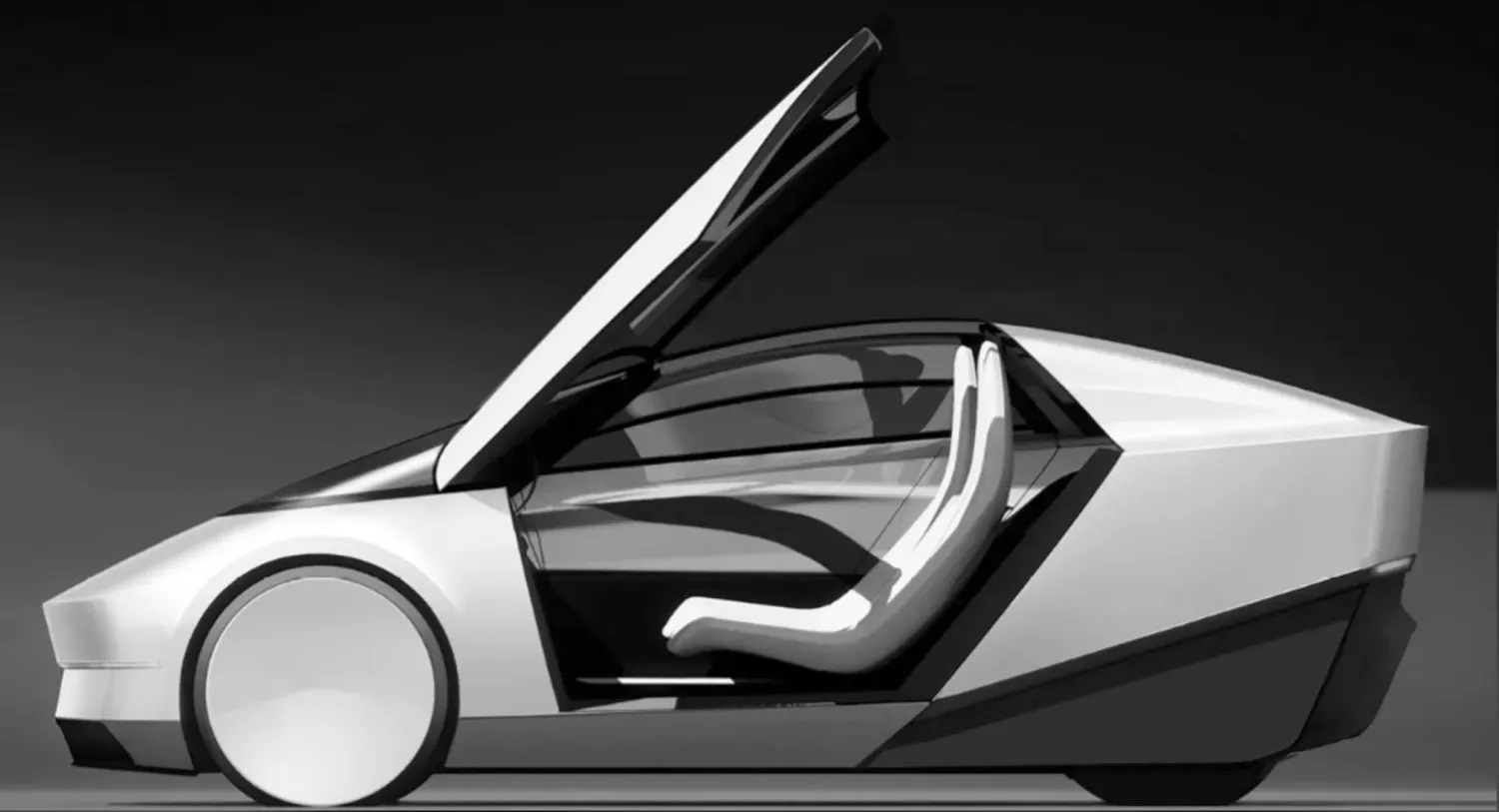
Tesla’s latest announcement of a two-seater robotaxi, dubbed the Cybercab, has left investors and experts perplexed. Unveiled by CEO Elon Musk at a much-hyped event near Los Angeles, the Cybercab is set to go into production in 2026 and cost less than $30,000. However, the vehicle’s low-slung, sporty coupe design—far from the traditional roomy taxi—has sparked confusion over its practicality for broader market needs.

The key concern raised by experts and investors alike revolves around the vehicle’s seating capacity and suitability as a taxi. Most people expect taxis to accommodate multiple passengers and have room for luggage, making the two-seater design puzzling. As Jonathan Elfalan, vehicle testing director at Edmunds.com, pointed out, “When you think of a cab, you think of something that’s going to carry more than two people.”

Tesla’s stock tumbled 9% on Wall Street the day after the reveal, as investors questioned the logic behind the design and Musk’s lack of detailed financial plans for the Cybercab. Analysts are particularly concerned about whether Tesla is targeting the right market. According to Sandeep Rao, a senior researcher at Leverage Shares, the market for two-door vehicles in the U.S. is tiny, comprising only 2% of car sales (excluding SUVs and pickups), which limits the appeal of the Cybercab.

Tesla also faces stiff competition in the robotaxi space. Companies like Waymo, owned by Alphabet, and Zoox, backed by Amazon, have already launched robotaxis with more practical designs. For instance, Waymo’s fleet of Jaguar Land Rover vehicles seats up to four passengers, a far cry from Tesla’s two-seater. Former Waymo CEO John Krafcik remarked that Tesla’s design seemed “more playful than serious,” emphasizing that its configuration could create challenges for older passengers and people with disabilities.

During the presentation, Musk promised that the Cybercab would have an operating cost of just 20 cents per mile, claiming this could make it cheaper to operate than public transport. However, he failed to clarify how Tesla plans to mass-produce these vehicles, obtain regulatory approvals, or compete with existing players like Waymo that are already operating robotaxis in certain U.S. cities.

Musk also teased the idea of a futuristic robovan capable of seating up to 20 people, but he did not provide a timeline for its production. While some believe that Tesla’s Cybercab may be a way to quickly introduce an autonomous vehicle to the market, the consensus among experts is that larger, more practical robotaxis will be necessary for Tesla to succeed in this space.

Analyst Sam Fiorani from AutoForecast Solutions noted that two-seaters have long been proposed as commuter vehicles but have never gained widespread traction. Similarly, Blake Anderson, a senior investment analyst at Carson Group, remarked that the two-seater design doesn’t align with Tesla’s goal of creating a mass-market, low-cost vehicle to expand its appeal.

Despite the mixed reactions, Musk remains optimistic about the potential of the robotaxi business, which he believes could eventually push Tesla’s valuation to $5 trillion, up from its current $700 billion. However, the Cybercab’s niche design, and the challenges it faces in a still-developing, tightly regulated market, suggest that Tesla will need to refine its approach to stay competitive.

Jim Cramer Advises Caution on Tesla Stock After Cybercab Debut Flops

After Tesla’s highly-anticipated Cybercab debut underwhelmed investors, CNBC’s Jim Cramer urged caution for those holding Tesla stock. Despite the excitement surrounding the unveiling of Tesla’s new robotaxi, the event fell short of delivering crucial details, leading Cramer to recommend a neutral approach to the stock.

During his show, Mad Money, Cramer commented that while Tesla CEO Elon Musk presented a visually impressive robotaxi concept, the lack of substantive information about the vehicle’s costs and rollout timeline left much to be desired. Cramer noted that investors should “stay on the sidelines” for now, as Tesla’s future in autonomous driving is still unclear.

Disappointing Market Reaction

Tesla, which has struggled with weak financial quarters earlier this year, needed a significant win to regain momentum. Musk had teased self-driving technology as a way to differentiate Tesla from other electric vehicle (EV) makers, especially as competition from Chinese EV companies intensifies. However, the Cybercab event failed to meet market expectations, and by the close of trading on Friday, Tesla shares had dropped 8.78%.

Cramer acknowledged that while it’s tempting to short Tesla stock after such a significant market reaction, he advised against it, calling it “dangerous to bet against Elon Musk.” The uncertainty around Tesla’s autonomous driving capabilities has caused investors to question whether Tesla can make the transition from being seen purely as an EV maker to a legitimate player in the self-driving space.

Competitive Landscape

As Tesla stumbled, rideshare companies like Uber and Lyft saw their stocks rise, with Uber hitting an all-time high. The threat that Tesla’s robotaxis could pose to rideshare companies has seemingly diminished for now, as the lack of concrete details from Tesla’s event reassured investors that Cybercab won’t be disrupting the rideshare industry anytime soon.

Tesla’s challenge extends beyond the unveiling flop. Cramer emphasized that the EV market, once expected to be vast and profitable, has proven smaller than anticipated. For Tesla to successfully pivot to self-driving technology, it will need to offer more than flashy concepts and provide the kind of specific, actionable details investors and analysts crave.

In closing, Cramer reiterated his stance, advising investors to wait and see before making any moves with Tesla stock, given the uncertainty surrounding its autonomous driving ambitions.