Yazılar

Elon Musk Unveils Futuristic ‘Cybercab’ Robotaxi, Yet Faces Skepticism Over Timelines

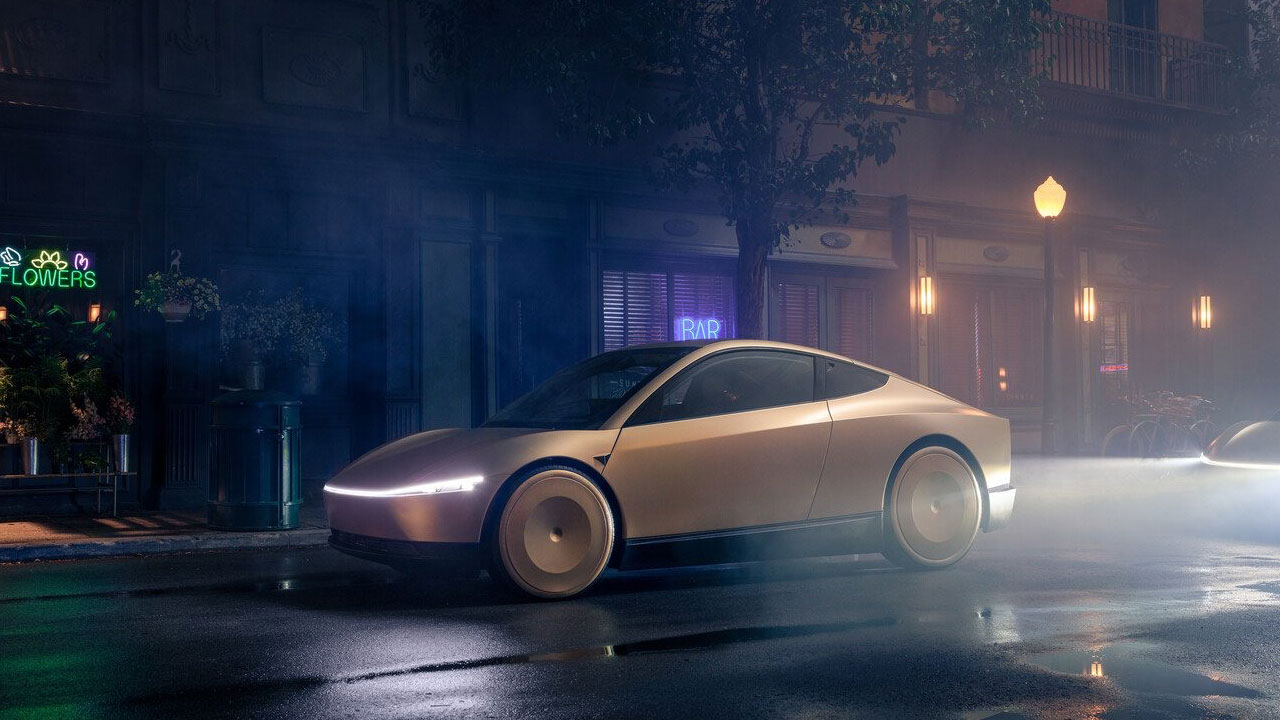
Tesla CEO Elon Musk presented his latest vision for a future dominated by self-driving vehicles, revealing designs for the highly anticipated Cybercab robotaxi at a star-studded event in California on Thursday. Musk’s bold vision includes a world where autonomous vehicles operate without human intervention, transforming cityscapes by replacing parking lots with parks and ushering in a new “age of abundance.”

The futuristic designs featured sleek, metallic aesthetics, evoking a sci-fi world that Musk compared to the dystopian movie “Blade Runner”—though with a more optimistic twist. The presentation also showcased a Robovan, designed for larger groups or cargo, alongside the Cybercab. These driverless vehicles, Musk promised, would be on the roads within a few years, with the Cybercab slated for production by 2026.

Familiar Promises, New Skepticism

Musk is no stranger to making ambitious promises. His timeline for the Cybercab is just the latest in a series of delayed targets. In 2019, Musk claimed Tesla’s fleet of self-driving cars would be available by 2020. That timeline was missed, with Musk later admitting that he tends to be “a little optimistic” about deadlines. During Thursday’s event, even though the unveiling was delayed by nearly an hour, Musk maintained the enthusiasm of the crowd, who cheered for his 20-minute presentation.

Tesla’s Full Self-Driving (FSD) feature, which is available for $8,000, has yet to fulfill its promise of complete autonomy, still requiring human drivers to remain alert and take control when necessary. Musk claimed that in states like California and Texas, Teslas with FSD will be fully autonomous by next year, provided state regulators give their approval.

The Cybercab, unlike Tesla’s current vehicles, will be designed specifically for fully autonomous operation, with no steering wheel, brake pedals, or accelerator. It will feature a wireless charging system that charges the vehicle by driving over a charging plate, eliminating the need for plugs.

Competitive Landscape: Falling Behind?

While Musk’s presentation was met with fanfare, Tesla faces significant competition in the autonomous driving space. Companies like Google’s Waymo and Amazon’s Zoox have already deployed self-driving services in select cities. Tech journalist Kara Swisher, a frequent critic of Musk, pointed out that while Tesla is still showcasing prototypes, Waymo has been operational in San Francisco for some time. Swisher sarcastically referred to Tesla’s Robovan design as “a lovely toaster on wheels,” highlighting that other companies have moved beyond the conceptual stage to real-world deployment.

Overcoming Technical and Regulatory Challenges

Tesla’s FSD technology, while impressive, is far from perfect. Some independent testing shows that drivers need to intervene every 13 miles on average. Musk has admitted that previous timelines for achieving full autonomy were “overly optimistic” but continues to project confidence, stating that Tesla’s system will be safer than human drivers by the end of this year.

Analysts like Gene Munster from Deepwater Asset Management have echoed concerns about the feasibility of Musk’s timelines, especially given the difficulty in achieving the required levels of accuracy for driverless systems. Munster estimates that it will take Tesla at least two more years to refine the technology and an additional two to three years to obtain regulatory approval.

Musk’s history of delayed product launches adds further skepticism. The Cybertruck, revealed in 2019, took four years to go into production, and other vehicles like the electric semi-truck remain in development over six years after their initial announcement. As Munster emphasized, patience will be key for investors waiting for the promises of Tesla’s autonomous future to become reality.

The Road Ahead: Opportunities and Challenges

Musk envisions a future where Tesla owners could rent out their autonomous vehicles when not in use, creating a new source of income. Tesla’s robotaxi service would compete not only with human-driven services like Uber and Lyft but also with other autonomous services already in development.

While Tesla has made significant progress in the electric vehicle space, the challenges of achieving full autonomy remain formidable. Regulatory approval, technical hurdles, and stiff competition from established tech companies are just a few of the obstacles Musk faces in delivering on his vision.

In the short term, the success of Tesla’s self-driving technology will likely hinge on its ability to refine the FSD feature and gain regulatory approval in key markets. In the long term, Musk’s grand vision of a world filled with autonomous vehicles, like the Cybercab and Robovan, will require both technological breakthroughs and patience from investors and consumers alike.

EU Governments Set to Vote on Chinese EV Tariffs Amid Concerns Over Retaliation

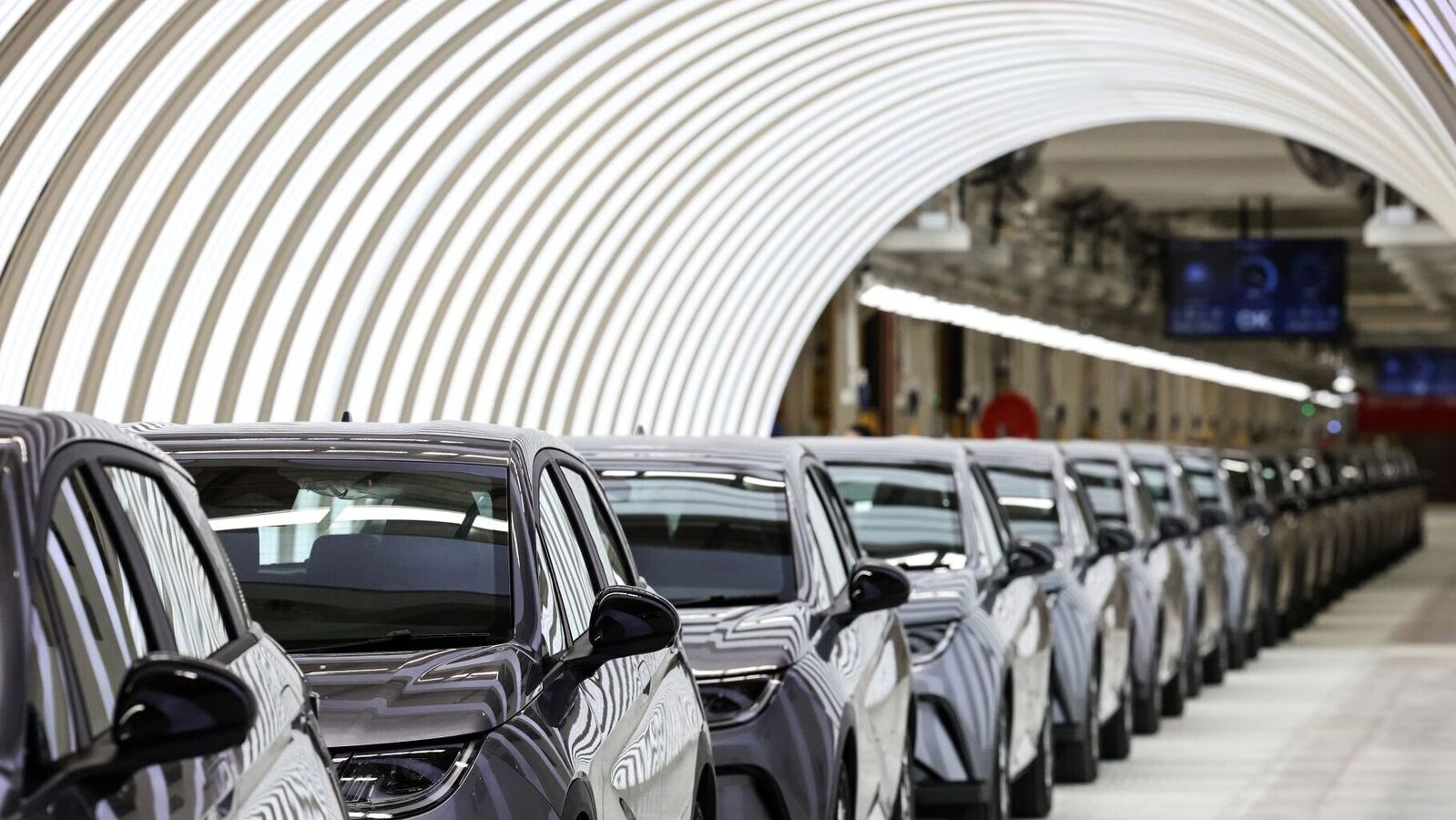
European Union member states are preparing for a crucial vote on Friday to determine whether to impose tariffs of up to 45% on Chinese-made electric vehicles (EVs). The proposed tariffs follow a year-long anti-subsidy investigation, which concluded that Chinese EVs benefit from unfair government subsidies, distorting competition within the EU market. The vote comes amid concerns of potential retaliation from Beijing, which has already initiated its own probes into European imports.

The European Commission, which manages trade policy for the bloc, has proposed the tariffs for the next five years. However, under EU rules, the decision requires a qualified majority, meaning 15 EU countries representing 65% of the bloc’s population must support or reject the proposal. If the vote is split, the Commission can still move forward with the tariffs but may also opt to amend the proposal to gain broader support.

France, Italy, Greece, and Poland have reportedly voiced their support for the tariffs, ensuring there won’t be a blocking majority against the measures. Meanwhile, Germany, the EU’s largest economy and a major car producer, is expected to vote against the tariffs. German automakers, such as Volkswagen, have expressed strong opposition, citing the significant share of their sales that come from the Chinese market, which accounts for almost a third of their global revenue. Volkswagen has labeled the proposed tariffs as “the wrong approach.”

The stance of Spain has shifted in recent days. Previously in favor of tariffs, Spanish officials have now called for a continuation of negotiations rather than imposing immediate duties. In a letter to European Commission Vice President Valdis Dombrovskis, Spain’s economy minister suggested seeking a deal on prices and relocating battery production to the EU. Spanish Prime Minister Pedro Sanchez had also indicated a desire to reconsider the EU’s position during his visit to China.

While some EU countries remain cautious of China’s reaction, the bloc’s relationship with China has become more complex over the past five years. The EU now views China not only as a partner but also as a competitor and systemic rival. In light of China’s 3 million surplus EV production capacity — double the size of the EU market — Europe has emerged as the most viable market for Chinese exports, especially given the 100% tariffs imposed by the United States and Canada on Chinese EVs.

The Commission remains open to further negotiations with China, considering alternatives to tariffs. A possible solution could involve setting minimum import prices based on various criteria, including EV range, battery performance, and vehicle specifications. The current tariff proposal includes additional duties of 7.8% for Tesla and 35.3% for SAIC and other non-cooperating companies, on top of the EU’s standard 10% import duty for cars.

As the EU prepares for this pivotal vote, the outcome will likely have far-reaching consequences for EU-China trade relations, the European automotive market, and the broader global EV supply chain.


Biden Proposes Ban on Chinese Vehicles Over Software and National Security Concerns

The Biden administration has proposed new regulations that would effectively ban Chinese vehicles from U.S. roads due to concerns over data privacy and national security. Announced by the U.S. Commerce Department, the proposed rules would prevent key Chinese software and hardware from being integrated into connected vehicles, citing risks of surveillance, remote control, and potential foreign manipulation. The regulations would apply to both Chinese-made cars and components from other adversarial countries like Russia.

This move, reported first by Reuters, extends ongoing U.S. restrictions on Chinese imports and comes amid escalating fears about the collection of data by Chinese companies. The administration’s concern is centered around connected vehicles, which are equipped with network hardware enabling internet access, allowing data sharing with external devices. Officials fear that this capability could be exploited for surveillance or even control of vehicles on American roads.

Commerce Secretary Gina Raimondo emphasized the potential risks posed by foreign adversaries having the ability to remotely control vehicles, which could lead to widespread disruptions and safety hazards. “In an extreme situation, a foreign adversary could shut down or take control of all their vehicles operating in the United States all at the same time, causing crashes, blocking roads,” Raimondo said during a briefing.

The proposed regulation would go into effect for software in the 2027 model year and for hardware by 2029. While the rules would apply to all vehicles on U.S. public roads, they would not affect agricultural or mining vehicles used off-road. Chinese automakers could apply for exemptions under “specific authorizations” but would face steep challenges entering or remaining in the U.S. market.

The Commerce Department’s proposal builds on earlier measures, including a 100% tariff on Chinese electric vehicles (EVs) and new restrictions on critical components like EV batteries. The Biden administration has ramped up efforts to curtail Chinese influence in the U.S. automotive industry, despite the limited number of Chinese cars currently imported. Raimondo noted that the administration is taking action early, before Chinese components become more common in U.S. vehicles.

White House National Security Adviser Jake Sullivan underscored the urgency of the issue, stating that the presence of potentially millions of connected vehicles with long lifespans increases the risk of sabotage and disruption. Sullivan also pointed to evidence of Chinese malware being embedded in U.S. infrastructure as a justification for the proposal.

The Chinese Embassy in Washington has pushed back against the plan, urging the U.S. to adhere to international trade rules and warning that China will “firmly defend its lawful rights and interests.” Meanwhile, the Alliance for Automotive Innovation, representing major automakers such as General Motors, Toyota, Volkswagen, and Hyundai, has expressed concern over the time and complexity involved in replacing software and hardware sourced globally, including from China.

The Commerce Department is seeking public input on the proposal over the next 30 days, aiming to finalize the regulation by January 20.