Yazılar

Trump jokes about AI “taking over the world” as U.S. and U.K. sign tech deal

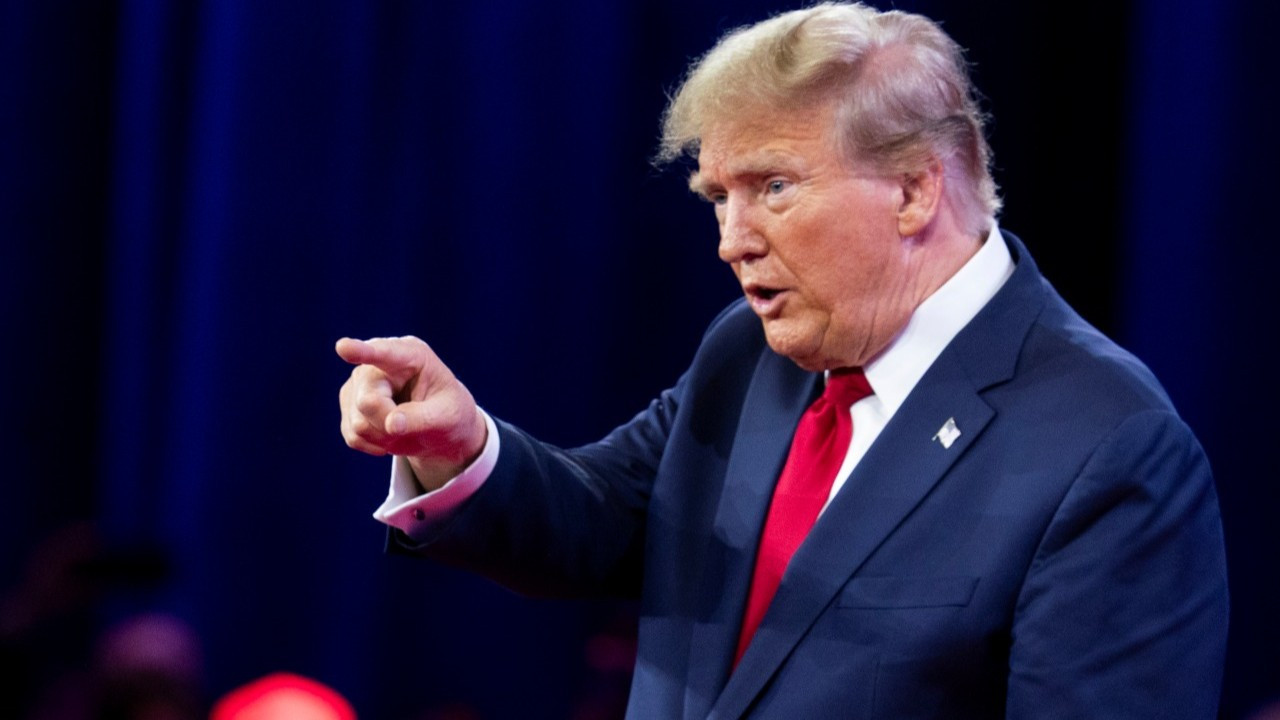
U.S. President Donald Trump, speaking alongside U.K. Prime Minister Keir Starmer in London, quipped that artificial intelligence was “taking over the world” and admitted he hoped tech leaders understood it better than he did. The remarks came during Trump’s second state visit to Britain, at an event attended by Nvidia CEO Jensen Huang and other industry figures.

Departing from prepared remarks on the strength of U.S.-U.K. relations and new tech investments, Trump turned to Huang with a laugh: “Jensen, I don’t know what you’re doing here. I hope you’re right. All I can say is, we both hope you’re right.” His comments drew laughter from Starmer and the audience.

The two leaders signed a “Tech Prosperity Deal”, pledging deeper cooperation on artificial intelligence, quantum computing, and civil nuclear projects. Under the agreement, Nvidia will deploy 120,000 GPUs across Britain, marking its largest European rollout to date.

Trump, characteristically playful, joked with Treasury Secretary Scott Bessent before signing: “Should I sign this? If the deal’s no good, I’m blaming you, Scott.”

The partnership aims to strengthen transatlantic research and industry collaboration while addressing the disruptive potential of AI—a technology Trump acknowledged as both transformative and unsettling.

Intel–Nvidia deal could strengthen Intel’s next-gen chipmaking plans

Intel’s long-struggling manufacturing arm may gain fresh momentum from a new $5 billion partnership with Nvidia, analysts say. The deal, announced Thursday, gives Nvidia a roughly 4% stake in Intel and establishes a framework for the two companies to co-develop multiple generations of joint products.

These products will link Intel’s central processors with Nvidia’s AI and graphics chips using NVLink, Nvidia’s proprietary high-speed interconnect. By being directly tied to Nvidia’s flagship chips, Intel’s CPUs could gain an advantage over rivals such as AMD, which currently lacks such integration.

Crucially, the collaboration could also bolster Intel’s 14A manufacturing process, planned for 2027 but still financially uncertain. Intel has said it needs significant customer commitments to justify the cost of building 14A. Analysts believe Nvidia’s involvement, even indirectly, could help secure the production volumes necessary to make the investment viable.

“Any relationship with Nvidia … should be seen as a possible extension of the partnership in the future,” said Jack Gold of J.Gold Associates, suggesting that deeper collaboration on Intel’s foundry services could follow. Intel will supply CPUs for the joint products and package Nvidia chips in some cases, while engineers from both firms will collaborate to translate Nvidia’s designs into physical chips made in Intel factories.

The move is strategically important because, like Nvidia, Intel often relies on Taiwan’s TSMC for advanced manufacturing. If the joint products prove successful, the deal could ensure Intel’s fabs are busy enough to deliver returns on its multibillion-dollar investments. “It gives me a higher degree of confidence that 14A continues,” said Ben Bajarin of Creative Strategies.

For Nvidia, the tie-up opens doors to Intel’s vast enterprise and government customer base, which depends on decades of software optimized for Intel’s chips. Analysts note that AMD could be the biggest loser from the partnership, as two of its fiercest competitors are now aligning their technologies.

Huawei outlines chip roadmap, challenges Nvidia with AI supernodes

Huawei unveiled its long-term semiconductor strategy at the Huawei Connect conference in Shanghai, presenting detailed timelines for its Ascend AI chips, Kunpeng server processors, and next-generation computing systems. The move signals China’s determination to reduce reliance on foreign chipmakers like Nvidia while intensifying the U.S.-China tech rivalry.

Rotating chairman Eric Xu announced that Huawei will release new Ascend chips annually, doubling compute power with each iteration. The company launched its Ascend 910C earlier this year and plans to follow with the Ascend 950 in 2026, the 960 in 2027, and the 970 in 2028. Alongside, Huawei is preparing high-performance “supernodes” designed to interconnect thousands of chips at high speed. The Atlas 950 system, expected in late 2026, will link 8,192 Ascend chips, while the Atlas 960 in 2027 will support 15,488 chips—leaps over the existing Atlas 900.

Huawei also revealed it has developed proprietary high-bandwidth memory (HBM), a field dominated by South Korea’s SK Hynix and Samsung, strengthening its position in advanced computing. Updated versions of its Kunpeng server chip are scheduled for 2026 and 2028.

The timing of the announcement coincides with escalating tensions: Chinese regulators have accused Nvidia of antitrust violations and ordered local firms to halt purchases of its AI chips. Analysts say Huawei’s show of strength reflects growing confidence that U.S. export controls will not derail China’s domestic chipmaking progress.

Despite Huawei’s advances, engineers acknowledge Nvidia’s chips still outperform Chinese alternatives. However, Huawei is betting on leveraging China’s networking and power infrastructure advantages to offset manufacturing gaps and push large-scale systems forward.

Chinese semiconductor stocks rallied after reports of Beijing’s restrictions on Nvidia sales. The geopolitical backdrop looms large, with President Xi Jinping set to meet U.S. President Donald Trump amid renewed trade negotiations.