Yazılar

Analysts weigh in on Trump–Xi call over trade and TikTok

A phone call between U.S. President Donald Trump and Chinese President Xi Jinping on Friday eased tensions but left major issues unresolved, particularly the fate of TikTok and broader trade negotiations. Analysts say the call highlighted China’s confidence in playing the long game, while the U.S. appeared eager to keep talks alive.

Scott Kennedy (CSIS) noted that neither side announced a firm deal, suggesting negotiations are ongoing or that leaders are holding back until more comprehensive progress is made. He argued China feels “relatively unthreatened” and that the talks are unfolding on Xi’s terms.

Bonnie Glaser (German Marshall Fund) observed Trump’s readout was more explicit about TikTok, while Xi avoided Taiwan—perhaps reassured by recent U.S. decisions to delay arms sales and downgrade Taiwan-related engagements.

Craig Singleton (FDD) warned that China may be using summit diplomacy to stall U.S. competitive measures while extracting concessions. He said Beijing is trading symbolic gestures, like fentanyl actions, for relief on tariffs and tech controls, with Washington “hungry for a summit” more than China.

William Yang (ICG) emphasized that Beijing wants U.S. export controls lifted, particularly on advanced chips, before committing to bigger trade deliverables. He said China is betting Trump’s desire for a deal will push him toward concessions, while holding leverage in rare earth supply chains.

Danny Russel (Asia Society) downplayed the outcomes, calling the TikTok reference the only semi-concrete result, while noting the deferral of Trump’s China visit shows how slowly negotiations are moving.

Patrick Cronin (Hudson Institute) framed the call as a temporary easing of rivalry, giving both leaders economic “breathing space” while masking deeper great-power competition beneath the surface.

Ali Wyne (ICG) highlighted the prospect of three in-person meetings—at APEC in South Korea, a Trump trip to China next year, and an eventual Xi visit to the U.S.—calling the sustained engagement welcome, even if no breakthrough on TikTok emerged.

Overall, analysts see Beijing as confident, patient, and willing to leverage time and resources, while Washington seeks symbolic wins to show progress, leaving the TikTok deal and trade negotiations hanging in limbo.
Larry Ellison reemerges as tech and media power player

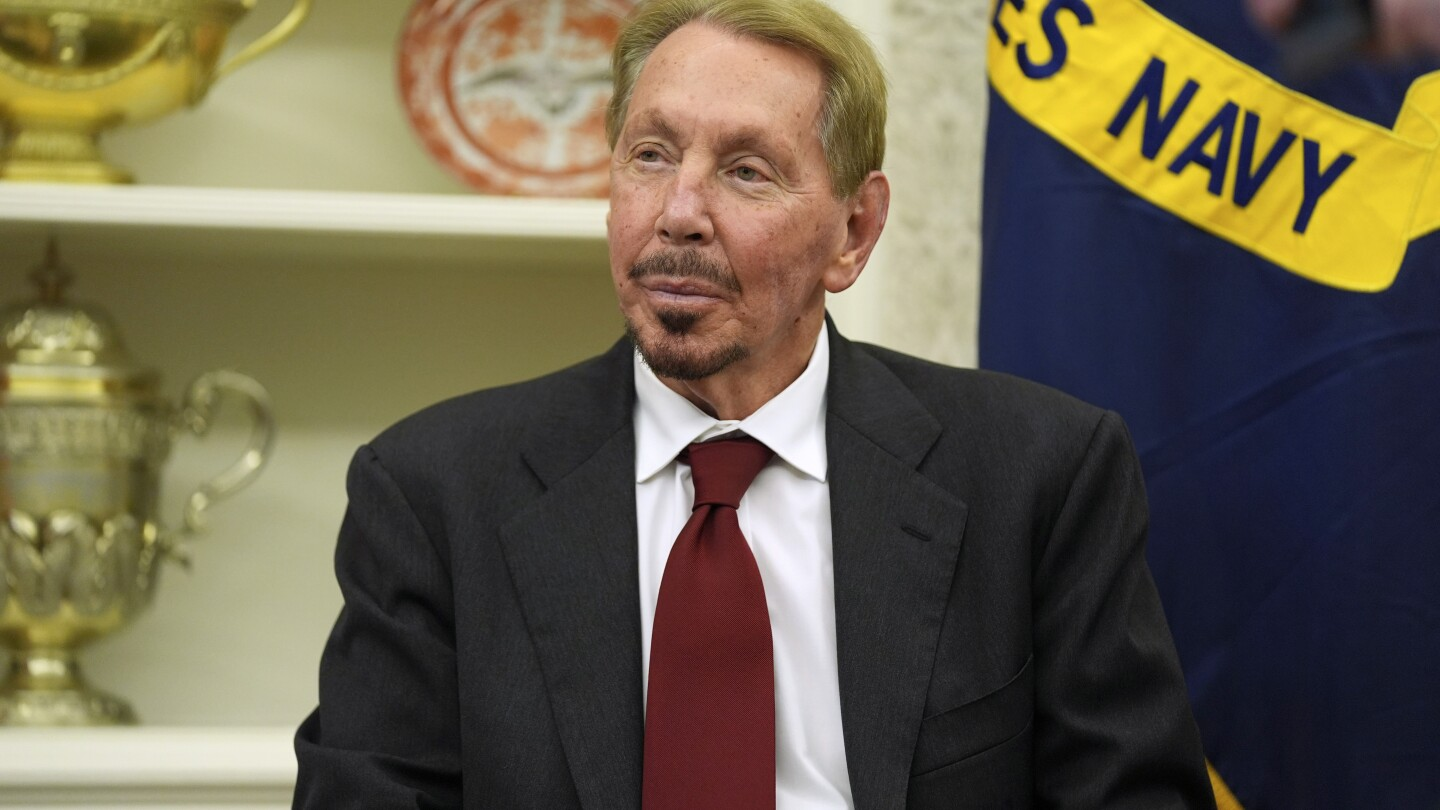
Forty-eight years after co-founding Oracle, Larry Ellison is once again at the center of global business headlines. Oracle’s stock surged 35.9% on the back of blockbuster cloud computing deals tied to AI, propelling Ellison’s net worth to nearly $400 billion—second only to Elon Musk.

Adding to his influence, Ellison’s family-controlled Paramount is preparing a bid for Warner Bros Discovery, a move that could dramatically reshape Hollywood. At the same time, his son David Ellison has begun steering CBS News with a more conservative tilt, hiring former Hudson Institute CEO Kenneth Weinstein as ombudsman and reportedly courting journalist Bari Weiss for a leadership role.

Ellison has also entrenched Oracle in the TikTok saga, providing U.S. infrastructure for the Chinese-owned app since 2022 amid national security scrutiny. Behind the flash of yachts, Hawaiian islands, and movie cameos—he played himself in Iron Man 2—Ellison has steadily bet big on AI.

Oracle became a major AI landlord, securing marquee clients including Meta, Elon Musk’s xAI, and OpenAI, which committed to a $300 billion compute deal over five years. This pivot helped Oracle’s booked revenue soar more than four-fold to $455 billion.

Unlike rivals Microsoft, Amazon, and Google, Oracle chose not to build custom AI chips, instead deepening ties with Nvidia. At a 2024 dinner with Musk and Nvidia CEO Jensen Huang, Ellison reportedly said, “Please take our money”—and soon after, Oracle secured GPU supplies that fueled the Stargate project with OpenAI.

Oracle’s cloud revival—after a failed 2016 launch—has proven cheaper and more adaptable. Its rapid scaling during the Zoom pandemic traffic surge and smooth takeover of TikTok’s U.S. user data in 2022 highlighted technical strength.

Still, huge risks remain. Oracle outsources critical infrastructure like land, data centers, and power, making it reliant on partners. Analysts warn that dependence on a small group of AI clients—particularly OpenAI—could expose Oracle to shocks if those firms stumble.

Ellison’s career has long swung between hubris and vindication, but with AI reshaping the tech landscape, the Silicon Valley “bad boy” may yet have the last laugh.

U.S. Treasury’s Bessent to Meet China’s He Lifeng in Madrid on Trade, TikTok, and Money Laundering

U.S. Treasury Secretary Scott Bessent will meet Chinese Vice Premier He Lifeng in Madrid next week for high-level talks covering trade, TikTok, and illicit finance, the Treasury said Thursday. The meetings, set for September 12–18, coincide with Bessent’s trip to Spain and Britain, ahead of his participation in President Donald Trump’s state visit to the UK (Sept. 17–19).

Focus Areas

  • Trade and Tariffs: The talks mark the fourth major in-person meeting between Bessent and He this year, as Washington and Beijing seek to uphold a fragile trade truce. A July meeting in Stockholm resulted in a 90-day tariff pause extension, approved by Trump until November 10. U.S. tariffs on Chinese goods remain steep at ~55%, with agriculture a sticking point. Washington accuses China of shifting farm imports to Brazil and Argentina, undercutting U.S. soybean farmers.

  • TikTok Deadline: ByteDance’s short-video platform faces a U.S. ban unless it is sold to U.S. ownership. Trump extended TikTok’s divestment deadline to September 17. Treasury confirmed the app will be discussed in Madrid, after not featuring in July’s talks.

  • Money Laundering Cooperation: Both sides will address illicit finance, which Washington links to Chinese banks allegedly enabling Russia’s access to military technologies amid the Ukraine war. Treasury retains the authority to sanction Chinese banks involved in such transfers, though it has not yet exercised it.

Broader Context

The Madrid meeting comes as the world’s two largest economies attempt to stabilize relations:

  • Rare earth exports from China to the U.S. were restored under the current truce.

  • However, agriculture and tariffs remain unresolved, with U.S. farmers facing a shrinking share of the Chinese market.

  • Trump has maintained high tariffs on Chinese goods, including those tied to fentanyl supply chain disputes.

The outcome of the Madrid talks remains uncertain, particularly on farm trade or tariff relief, but the inclusion of TikTok and money laundering suggests Washington is broadening the agenda beyond traditional trade disputes.